


Juba, South Sudan – October 19, 2025 – In a move that underscores deepening fissures within South Sudan’s ruling Sudan People’s Liberation Movement (SPLM), a leaked internal directive has exposed urgent efforts by top party leadership to shore up support in the restive Bahr el Ghazal region amid the fallout from veteran politician Nhial Deng Nhial’s dramatic exit from the party.
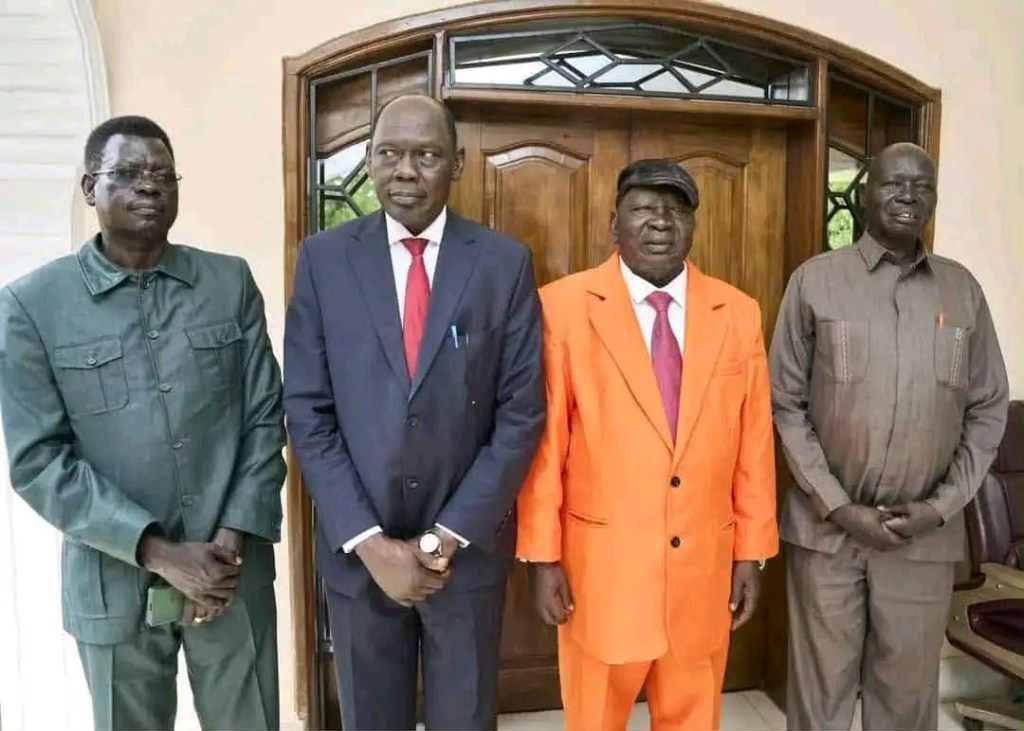
According to the confidential document, Vice President Dr. James Wani Igga – speaking on behalf of First Vice President Dr. Riek Machar, though the leak attributes the statement to “VP Dr. Benjamin Bol Mel” in what may be a reference to party coordination under Bol Mel’s influence – revealed that SPLM Chairman and President Salva Kiir Mayardit personally ordered the party’s Secretariat to convene a high-stakes meeting. Scheduled for Monday, October 20, 2025, the gathering will bring together SPLM Secretary General Santino Deng and other deputy secretaries with three prominent Bahr el Ghazal figures: Lewis Anei Madut Kuendit, Andrew Kuac Mayol, and Achuil Akoc Magardit.
The explicit purpose of the meeting, as outlined in the leak, is to facilitate the Tonj community’s nomination of two “influential youth candidates” for presidential appointment. Sources close to the matter suggest these appointments – potentially in key ministerial or advisory roles – are designed to inject fresh, loyal voices into the party’s upper echelons and stabilize loyalties in Tonj, Nhial Deng Nhial’s home district in Warrap State.
“This is a direct response to the political earthquake caused by Nhial Deng Nhial’s departure,” said a senior SPLM official, speaking on condition of anonymity due to the sensitivity of internal deliberations. “The aim is to neutralize the wave of dissent he’s stirring in the SPLM and across Bahr el Ghazal. By elevating young Tonj leaders, the party hopes to reclaim narrative control and prevent further defections from the region.”
Nhial Deng Nhial, a longtime SPLM stalwart and son of assassinated liberation-era icon William Deng Nhial, stunned the political establishment just days ago by announcing his resignation from the party on October 15. The 73-year-old veteran, who has served as foreign minister, presidential affairs minister, and chief negotiator in the 2005 Comprehensive Peace Agreement, launched the South Sudan Salvation Movement (SSSM) in a blistering critique of the Kiir administration. Accusing the SPLM of devolving into a “dictatorial” entity mired in corruption, insecurity, and repeated delays to national elections, Nhial called for a “second liberation” and free polls by the end of 2026.
His defection has reverberated through the SPLM’s core, particularly in Bahr el Ghazal, a Dinka heartland and traditional power base for President Kiir. Nhial, himself a Dinka from Tonj, has long symbolized the party’s founding ideals of equity and self-determination. His move aligns with broader frustrations over the non-implementation of the 2018 Revitalized Agreement on the Resolution of the Conflict in South Sudan (R-ARCSS), including stalled security arrangements and constitutional reforms.

The leaked directive arrives on the heels of an SPLM leadership summit on October 18, where Kiir rallied senior cadres to “take stock” of the crisis and forge a “new strategic direction” for the party. Party spokesperson James Logali emerged from that closed-door session emphasizing “cohesion and national development,” but insiders describe an atmosphere of alarm over potential copycat exits.
The nominees in question – Lewis Anei Madut Kuendit, Andrew Kuac Mayol, and Achuil Akoc Magardit – hail from influential networks in Bahr el Ghazal and have been vocal advocates for youth inclusion within the SPLM. Kuendit, a former youth league coordinator, and Mayol, known for his work in regional development forums, are seen as bridges between the party’s old guard and emerging leaders. Magardit, a community mobilizer from Lakes State with ties to Tonj, has reportedly been lobbying for greater equitable representation in party structures.
Analysts view this maneuver as a classic SPLM tactic: co-opting potential rivals through patronage to maintain ethnic and regional balances. “Tonj’s loyalty is pivotal in Bahr el Ghazal politics,” noted Dr. Lam Akol, a veteran opposition figure and SPLM splinter leader. “Nhial’s shadow looms large there; appointing his community’s youth is Kiir’s way of signaling that the party hasn’t abandoned its roots.”
Yet, the strategy carries risks. Nhial’s SSSM has already garnered endorsements from disaffected SPLM members and opposition voices, including indirect nods from the United People’s Alliance (UPA) amid stalled peace talks under the Kenya-led IGAD Tumaini Initiative. Social media buzz in Juba and diaspora communities reflects growing skepticism, with users decrying the SPLM’s “family-first” drift under influences like Kuol Manyang Juuk and Majak d’Agot.
As South Sudan hurtles toward a constitutionally mandated election deadline in December 2026 – now imperiled by ongoing transitional extensions – the October 20 meeting could mark a turning point. Will it staunch the bleeding in SPLM ranks, or merely accelerate the exodus of its historic cadres?
SPLM officials declined to comment on the leak, directing inquiries to the party’s upcoming national convention. For Nhial Deng Nhial, the message is clear: his “salvation movement” is just beginning.
This article is based on a leaked internal SPLM communication and corroborated by multiple sources familiar with the party’s operations. The Northern Press Bureau of Investigation and Publication contributed to background reporting on Nhial’s defection.




 The Malakal Press
Leave a comment