


Malakal, Upper Nile State, South Sudan – August 6, 2025
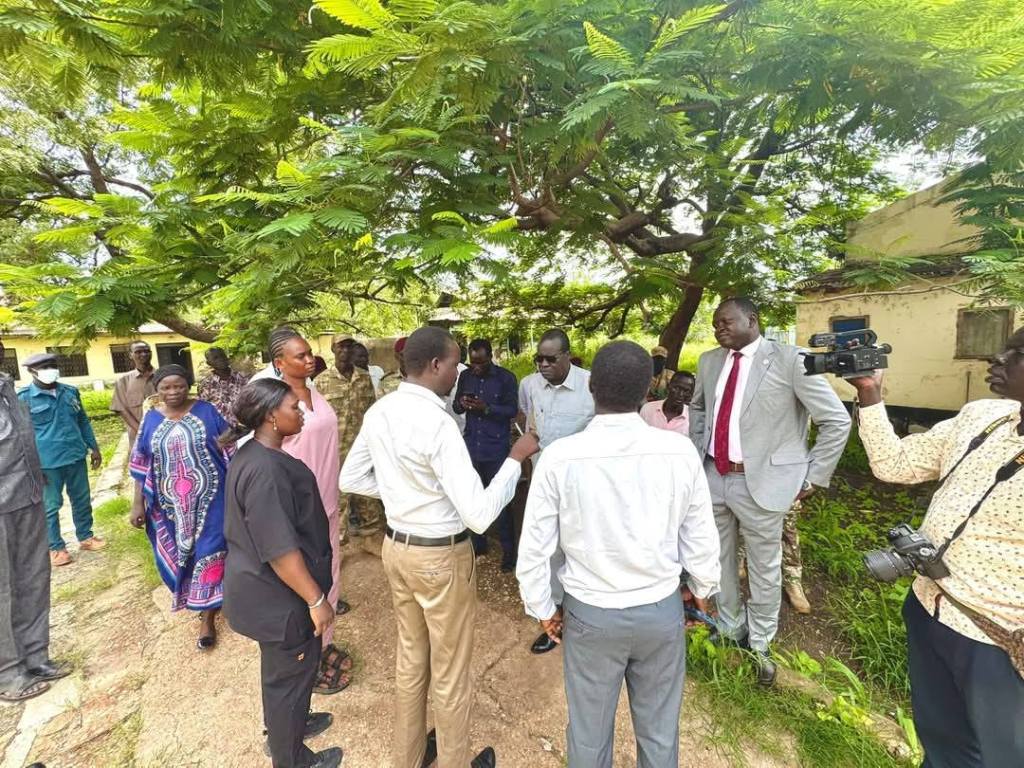
On Friday, August 1, 2025, Governor James Koang Chuol and his deputy paid a courtesy visit to Malakal Teaching Hospital, the primary referral facility serving all 13 counties in Upper Nile State.
The visit aimed to assess the hospital’s current conditions and underscore the state government’s commitment to improving healthcare services across the region. However, recent developments reveal a healthcare system under severe strain, grappling with persistent challenges while achieving critical milestones in patient care.
Ongoing Crisis at Malakal Teaching Hospital
Malakal Teaching Hospital continues to face significant hurdles, many of which stem from years of conflict, underfunding, and logistical difficulties. The facility, supported by the International Medical Corps (IMC) and UNICEF, serves over 10,000 patients, including a growing number of returnees and refugees fleeing the ongoing conflict in neighboring Sudan. The hospital’s infrastructure, heavily damaged during the 2013 civil war, struggles to meet the rising demand for services. Despite renovations aided by humanitarian agencies and the World Bank, the hospital faces critical shortages of medical staff, equipment, and supplies.
Dr. Kat Deng Ayii, the hospital’s Medical Director, highlighted the impact of a recent staff strike in September 2024, sparked by unpaid allowances for three months. Although emergency teams were formed to handle critical cases, the strike underscored the dire working conditions for healthcare workers. “We are stretched thin,” Dr. Deng stated, noting that the hospital operates with only a handful of doctors and nurses to manage over 100 daily outpatient visits. Power outages and inadequate drug supplies, particularly injectable antibiotics, further hamper service delivery.
The region’s escalating violence since February 2025 has exacerbated the crisis. The closure of Médecins Sans Frontières’ (MSF) hospital in Ulang County in April 2025, following armed looting and attacks on medical boats, has left a 200-kilometer stretch from the Ethiopian border to Malakal without a secondary healthcare facility. This has significantly increased pressure on Malakal Teaching Hospital, which now handles an influx of patients from surrounding areas. Additionally, a cholera outbreak declared in August 2024 continues to strain resources, with MSF reporting 65 patients admitted to a cholera treatment unit in Malakal Town Hospital by November 2024.
Achievements Amid Adversity
Despite these challenges, Malakal Teaching Hospital has made notable strides in delivering essential healthcare services. With support from UNICEF and the World Bank’s Health Sector Transformation Project, the hospital provided nearly 137,000 consultations, vaccinated 30,434 children, offered antenatal care to 3,330 women, and facilitated 5,479 safe deliveries between January and July 2023. The hospital’s maternity ward has been a lifeline for women like Nyandom Majok, a mother of six, who praised the facility’s care during her recent delivery. “Without the maternity ward, women would suffer more,” she said.
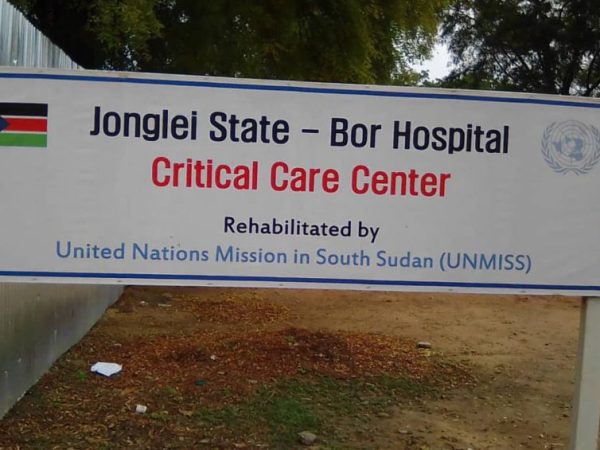
The hospital also benefits from a new medical waste incinerator, funded by the United Nations Mission in South Sudan (UNMISS) and constructed by IMC in 2021. This facility ensures safe disposal of hazardous waste, addressing a critical gap in infection control. Furthermore, the hospital’s COVID-19 triage area and trained staff have bolstered preparedness for infectious diseases, a vital asset amid the ongoing cholera outbreak.
Government’s Commitment to Reform
Governor Chuol’s visit signals a renewed focus on addressing the hospital’s challenges. During the visit, the governor reaffirmed the state government’s dedication to enhancing healthcare infrastructure and services. “Our state is peaceful now, and we are working to address hospital problems,” Governor Chuol stated, acknowledging the strain caused by the influx of refugees and internally displaced persons (IDPs). The launch of a $3 million peacebuilding project by the United Nations Development Programme (UNDP) in Malakal on July 25, 2025, aims to support the reintegration of IDPs and returnees while improving access to essential services, including healthcare.
However, local officials and hospital staff urge the national government to act swiftly. Dr. Ayuel Isaac Abiel, the hospital’s Acting Director General, emphasized the need to restore the facility’s status as a teaching hospital to attract more resources and staff. “The government must prioritize salaries, incentives, and equipment to sustain our operations,” he said.
A Call for Urgent Action
As Upper Nile State navigates cycles of violence, displacement, and disease outbreaks, Malakal Teaching Hospital remains a critical lifeline for thousands. The governor’s visit highlights both the facility’s resilience and the urgent need for sustained investment. With over 40,000 people still residing in Malakal’s overcrowded Protection of Civilians camp and more arriving from Sudan, the hospital’s ability to deliver care hinges on immediate support from the government and humanitarian partners.
Community leaders and health workers are calling for increased security to protect medical facilities, consistent funding for staff salaries, and reliable supplies to address the region’s growing healthcare demands. As South Sudan approaches its 14th independence anniversary, the state of Malakal Teaching Hospital serves as a stark reminder of the challenges and opportunities in building a robust healthcare system for all.
Sources: Radio Tamazuj, UNMISS, UNICEF South Sudan, MSF, UNHCR, UNDP





 The Malakal Press
Leave a comment